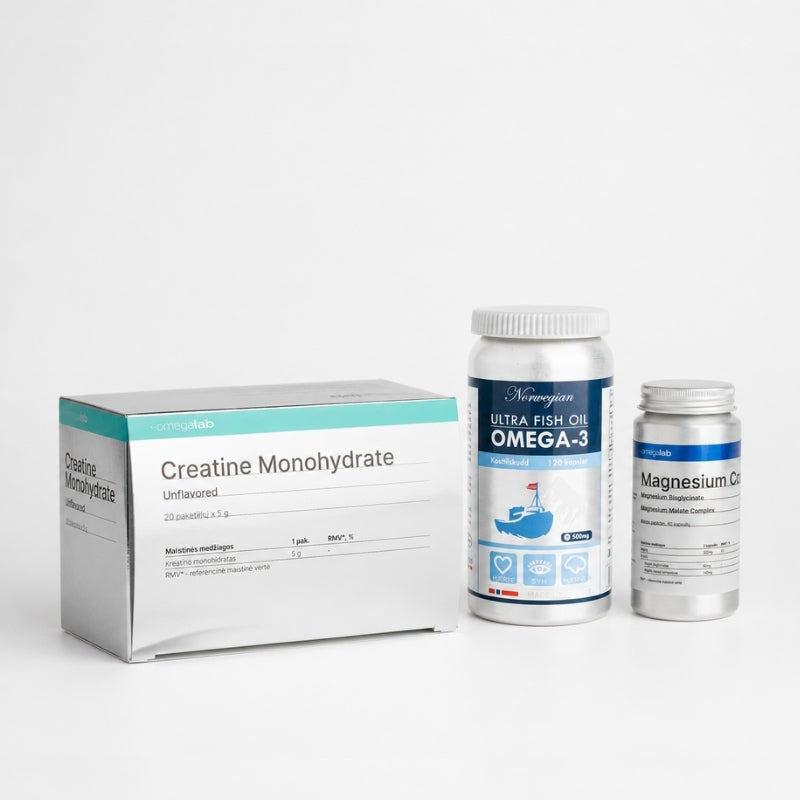
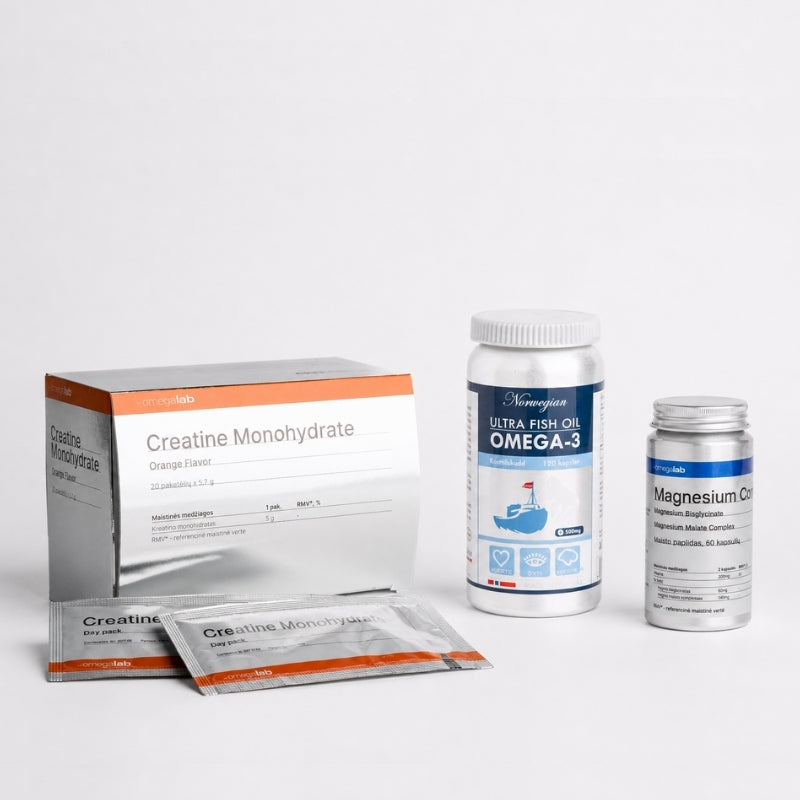
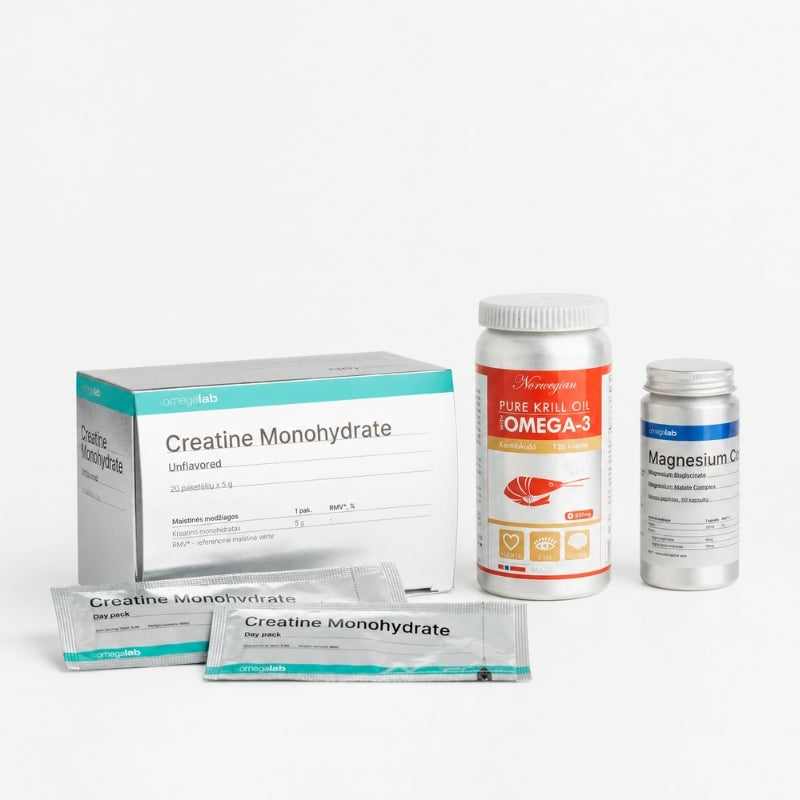
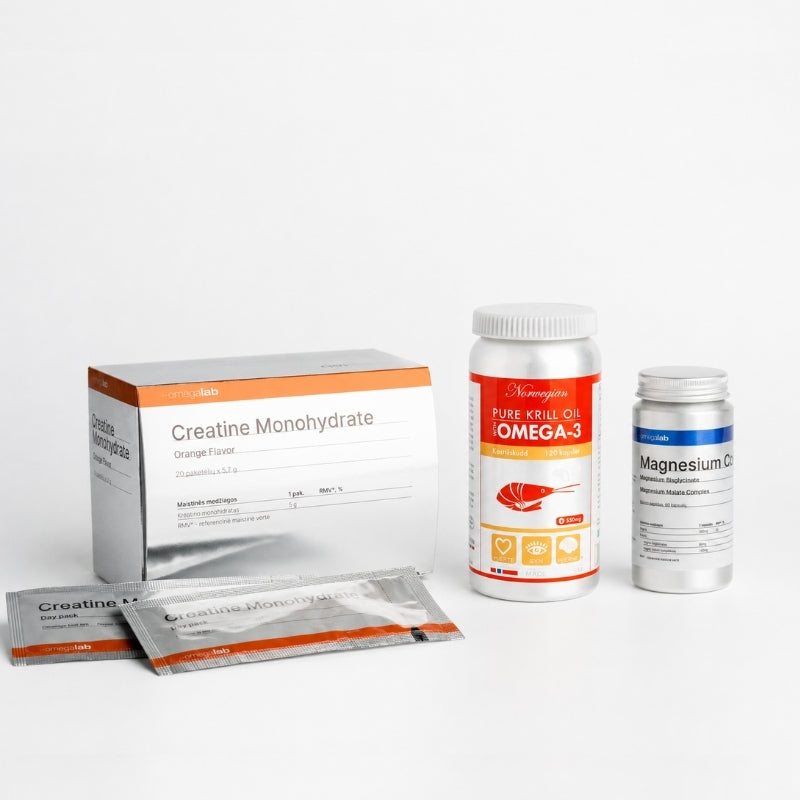
Creatine
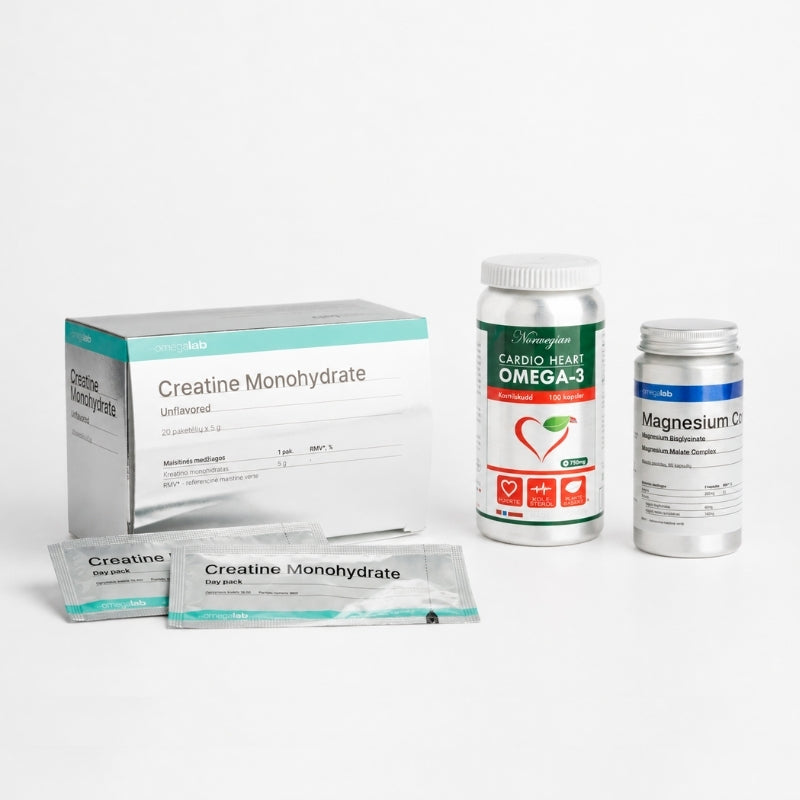
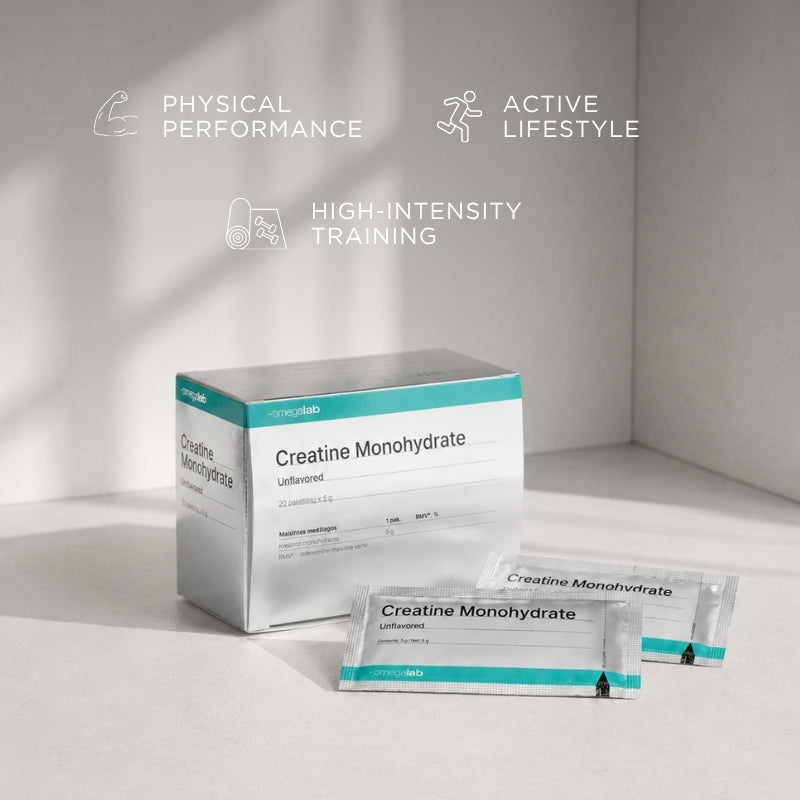
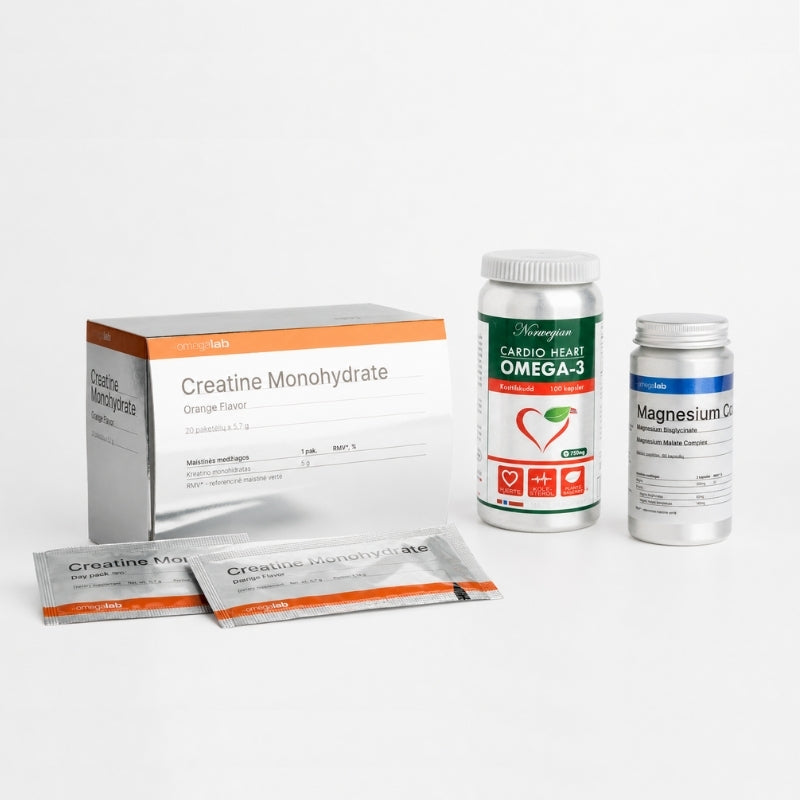
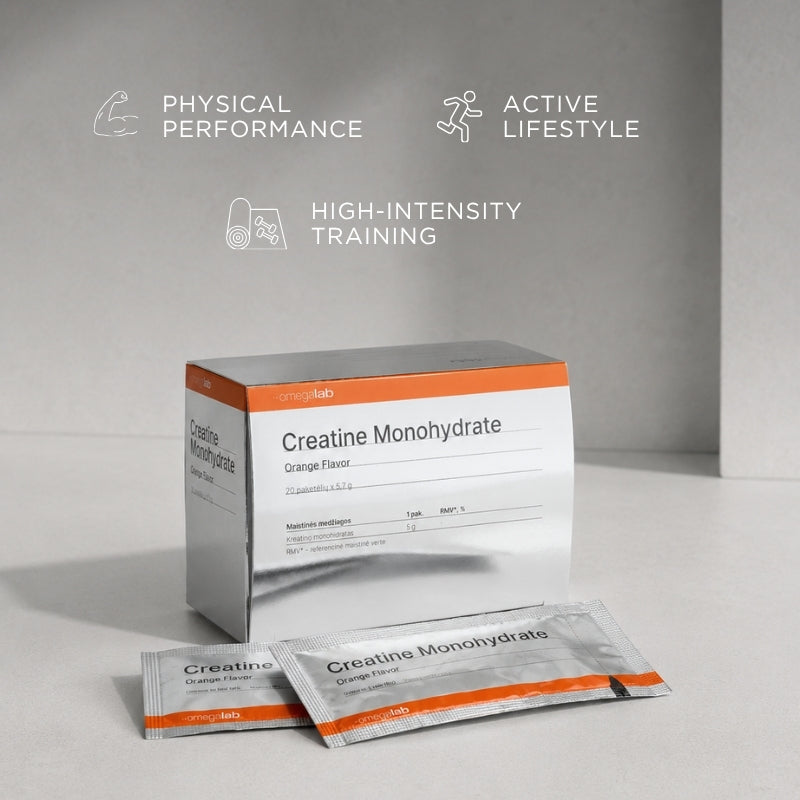
Creatine is a natural compound made from three amino acids — arginine, glycine, and methionine — that helps muscle cells regenerate energy quickly during intense exercise. It's one of the most popular supplements among athletes looking to build strength, endurance, and muscle mass.

What are the benefits of creatine?
-
Increases physical strength and muscle power.
-
Supports muscle growth and recovery after workouts.
-
Improves performance during short bursts of intense exercise.
-
May support brain function and cognitive performance, especially when you're fatigued.
-
May have a positive effect on mood and mental performance.
-
May help preserve muscle mass in older age, reducing age-related muscle loss (sarcopenia).
Possible symptoms of creatine deficiency
True creatine deficiency is rare in healthy people who eat a varied diet, especially one that includes animal products. Vegetarians and vegans, however, tend to have lower creatine stores in the body. Possible symptoms of low creatine levels include:
-
Reduced physical endurance and strength.
-
Faster muscle fatigue.
-
Slower muscle recovery after exercise.
-
Lower mental performance and concentration.
-
Headaches or migraines.
-
Mood swings or increased nervousness.
Natural sources of creatine
Creatine is found mainly in animal products — meat (especially beef) and fish. As a supplement, it's most commonly taken in powder, capsule, or tablet form.
Recommended daily dose of creatine
For maintenance, adults typically take 3-5 g of creatine per day. During the initial "loading" phase, which usually lasts 5-7 days, the dose is higher — around 20 g per day, split into several smaller portions.
The right dose should be worked out individually, based on your physical activity level, dietary habits, body weight, and overall health. Before taking higher doses or using creatine supplements long-term, it's a good idea to talk to a doctor or nutritionist.
Possible side effects of creatine and drug interactions
Creatine is generally well tolerated when the recommended dose isn't exceeded. In some cases, it can cause bloating, muscle cramps, or a temporary increase in weight due to fluid retention in the muscles.
Creatine can interact with medications that affect the kidneys, so talk to your doctor if you're taking diuretics or non-steroidal anti-inflammatory drugs, or if you have any kidney problems.